



Why high-growth companies are moving to Ashby, and how to do it well

If you spend any time around talent teams at high-growth tech companies right now, you will notice the same name keeps coming up. A company decides its applicant tracking system is holding it back or they need to do more with AI, runs a process, and lands on Ashby. Ramp, OpenAI, Notion, Cursor, Harvey. Shopify and Snowflake at the larger end. It has stopped being a quiet challenger and now “why wouldn’t we choose Ashby?” becomes the starting point.
The numbers back up the pattern. Ashby raised a $50M Series D in mid-2025, taking total funding past $120M. Perhaps more telling for us, they more than doubled their customer base over the past year, from roughly 1,300 to more than 2,700, with ARR up around 135% and the enterprise segment growing fast too, north of 120% year on year.
I want to lay out why I think it is happening, where it’s meaningfully better than the current competition and key considerations in realising its value. I will try here to write for the person who has to log into their ATS on Monday morning and recruit or pull out some usable data for distribution to leadership, rather than the person pitching it or the person selling against it.
Two disclaimers up front. First, at Wave1 we are an Ashby partner via the Ashby Experts programme and we support Ashby migrations by supplementing customer teams with our experts, so I am not an entirely neutral observer. Second, most of the sharpest detail here comes from our most recent go-lives, and from the customer profile we support most, which is high-growth, multi-country tech-forward companies, rather than 200,000-person enterprises. Please view everything through that lens.
The origin story

The thing to understand about Ashby is that it did not start as an ATS. It started as a better analytics layer for Greenhouse customers who were frustrated with Greenhouse's native reporting. It came from that wonderful creator of industry-defining companies, Y Combinator, from two founders that wanted to provide more powerful analytics tools to TA teams. It learned how to be genuinely useful in a narrow, painful area, realised it had quietly built a better foundation than the system it was using as a source of truth, then built the ATS around it and began migrating its own customers across.
I personally see this as the modern playbook for any AI-native HR software company with a realistic shot at scale. Find a point solution adjacent to the system of record, win on that, earn the right to do more, then expand from there. If you do a good job in the narrow area, you will win customer champions to do your marketing for you. Ashby is a great example of this across our customer base. It matters here because it explains the single biggest thing people love about the product. When you build the ATS on top of the analytics engine instead of bolting analytics on at the end, reporting is not an afterthought. It is the core - and you can tell the difference!
What is actually driving the migrations
Evangelist Talent leaders. One for the People Tech folks as I love a bit of history - Ashby is having an early Workday moment. Remember before the days of Workday logos plastered across the Formula 1 or airport, when they didn’t spend any money at all on marketing but every CPO was singing their praises and deploying at one company after another, recommending it to all their peers and praising it as the answer to their compliance nightmares on stages across the US and Europe? We are there currently with Ashby. Talent leaders love it and in an age where personal branding and appearing AI-forward is very important, they also love to talk about how much they love it. No one wants to be left behind and there is a real momentum across these leaders towards Ashby, even in an environment where pressure is increasing on all SaaS vendors versus vibe-coded internal alternatives. Aside from meaningful differentiators (see below!), the power of such momentum should not be underestimated. My advice here is to avoid noise and focus on what matters most for you and your organisation. Don’t allow this momentum alone to win you or your organisation over. Ashby is not perfect for every company, it’s very good for a subset of companies. Focus on clearly defining what really matters for you and comparing deeply to alternatives at this micro level. On the flipside, embrace the positives - if you firmly believe Ashby meets all your requirements better than any alternative, make sure your leadership know about all the leading companies that are migrating to Ashby!
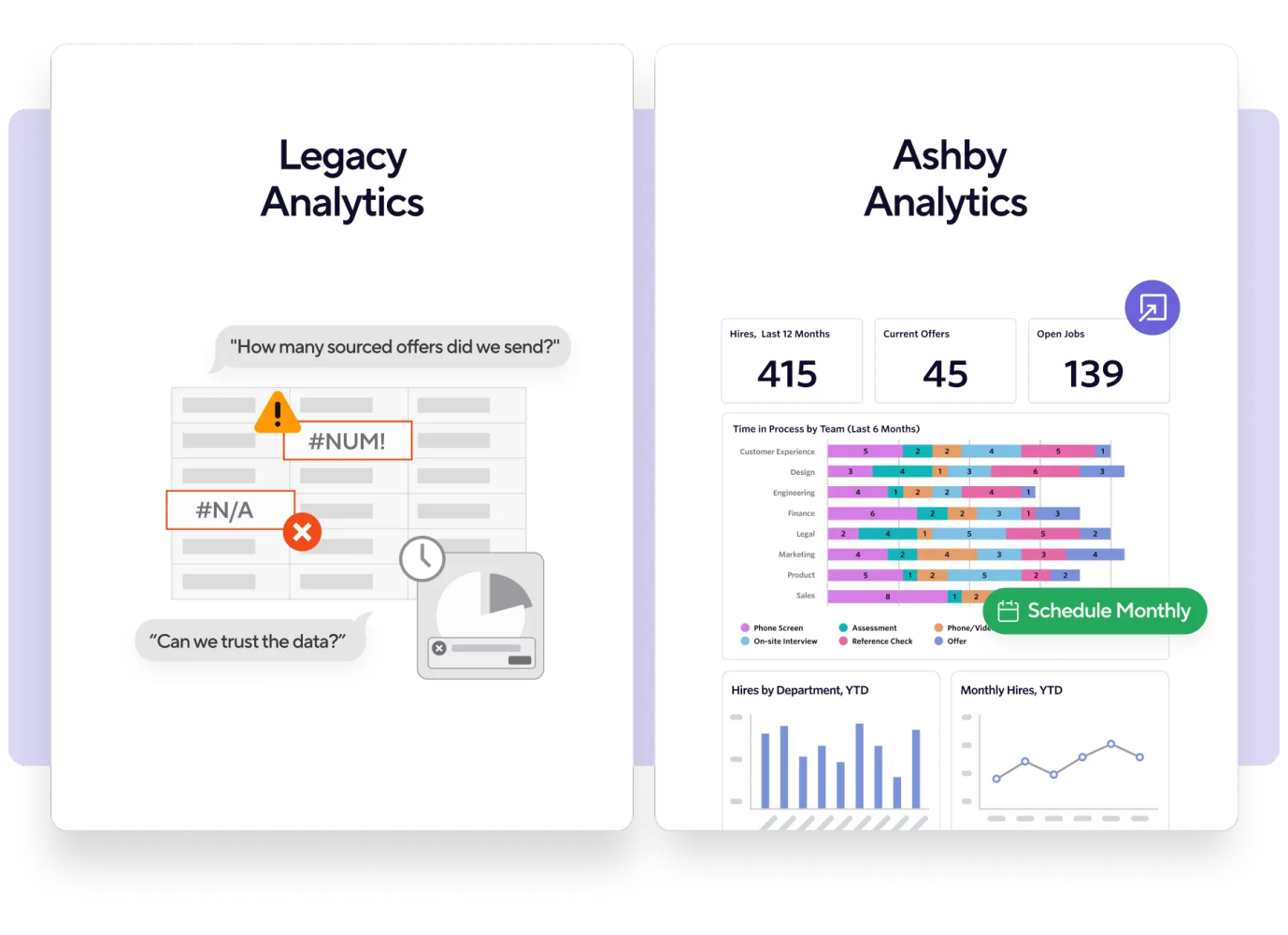
Analytics that were designed in, not added on. This is the one that comes up first almost every time. Because ATS, CRM, sourcing, scheduling and analytics can all sit on a single data layer, you can report across the entire funnel without stitching data together from multiple systems. You can filter on more or less any field, build the dashboard you actually want, and drill from a board-level metric down to an individual candidate. Ashby is also leaning hard into AI on top of that, letting you ask questions of your reports in plain language and push into more granularity than most recruiters would ever build manually. For a TA leader who has spent years exporting Greenhouse data into a spreadsheet to answer a simple question from the CEO, this alone can justify the move. At Wave1 we are helping several clients consolidate their data sources into a People data lake. We find there are still merits to doing this with your recruiting data, but those clients who have Ashby don’t need the same dashboards and self-service capability for their needs as the rest of the People function - they are typically much more self-sufficient, freeing up time for people data analysts and crucially, once Ashby is deployed there are usually meaningful improvements in data quality which improve accuracy and quality of insights, not just within Ashby natively, but wherever else you send the data.
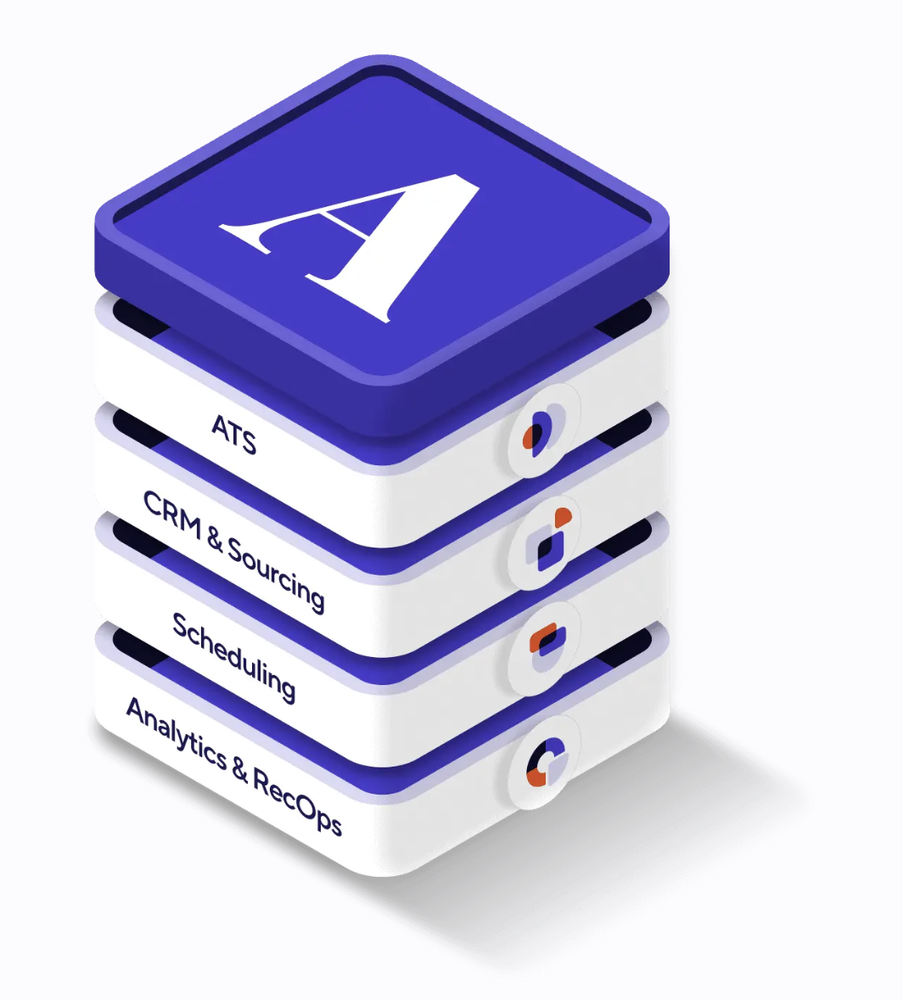
Genuine consolidation. The all-in-one pitch is always compelling and Ashby is making a lot of progress in offering a full suite of recruiting tools rather than just a core ATS, especially for less complex and smaller organisations. This is a commercial argument as much as a product one. One platform instead of stitching together an ATS, a sourcing and CRM tool, a scheduler, a note taker, and a separate analytics layer. Fewer logins, less context-switching, less integration glue to maintain, and one contract instead of many (that also don’t sequence nicely and force you to make difficult calls!). I would add a note of realism here, because consolidation is usually easier said than done. In practice, teams tend to retire the obvious overlaps first, such as a standalone sourcing tool, and hold onto others like scheduling for a little while longer. It also makes more sense from a change perspective. As we know, recruiters need time to reach full productivity with a new ATS, and it can help if you don’t change every module at once. A good level of consolidation is now available, but it is ideally a programme over time where you win credibility in the business incrementally, not a big-bang binary switch. Plan the sequence deliberately and the savings are there to be found. Of course, the products also evolve fast so with every passing month, you are potentially shipping an improved version of the module.
Truly native integrations. This deserves its own article because it’s a total game changer and key USP, so I will keep it short here. Ashby's integrations are natively built and supported by Ashby, rather than sitting on a report-based connector that breaks the moment a value does not match across both systems. The practical effect is dramatically less maintenance and, crucially, the responsibility for the integration working sits largely with the vendor rather than with you as a customer. If you have ever spent a long evening debugging a broken Greenhouse or Lever integration, you already understand why this is a bigger deal than it sounds.
Evergreen and pipeline management. This is perhaps a less glamorous feature that RecOps at complex large enterprises rave about once they have lived with it. Ashby lets you properly separate the job from the position, which makes managing evergreen and always-on pipelines far more workable than the equivalent in e.g. Greenhouse or Workday Recruiting. If you hire continuously into the same profiles, the difference is day and night.
Usability and tailored specifically to high-growth companies. It’s maybe an obvious one for anyone who has had an Ashby demo, but it just feels great to use for recruiters and hiring managers. A great example of tailoring to their core customer is how Slack native the platform can be - perhaps I am damaged by years of dealing with sub-par Workday slack app notifications and lack of functionality, but I have not seen such user-friendly offer approvals via slack from another ATS - it makes it look easy when we know it isn’t.
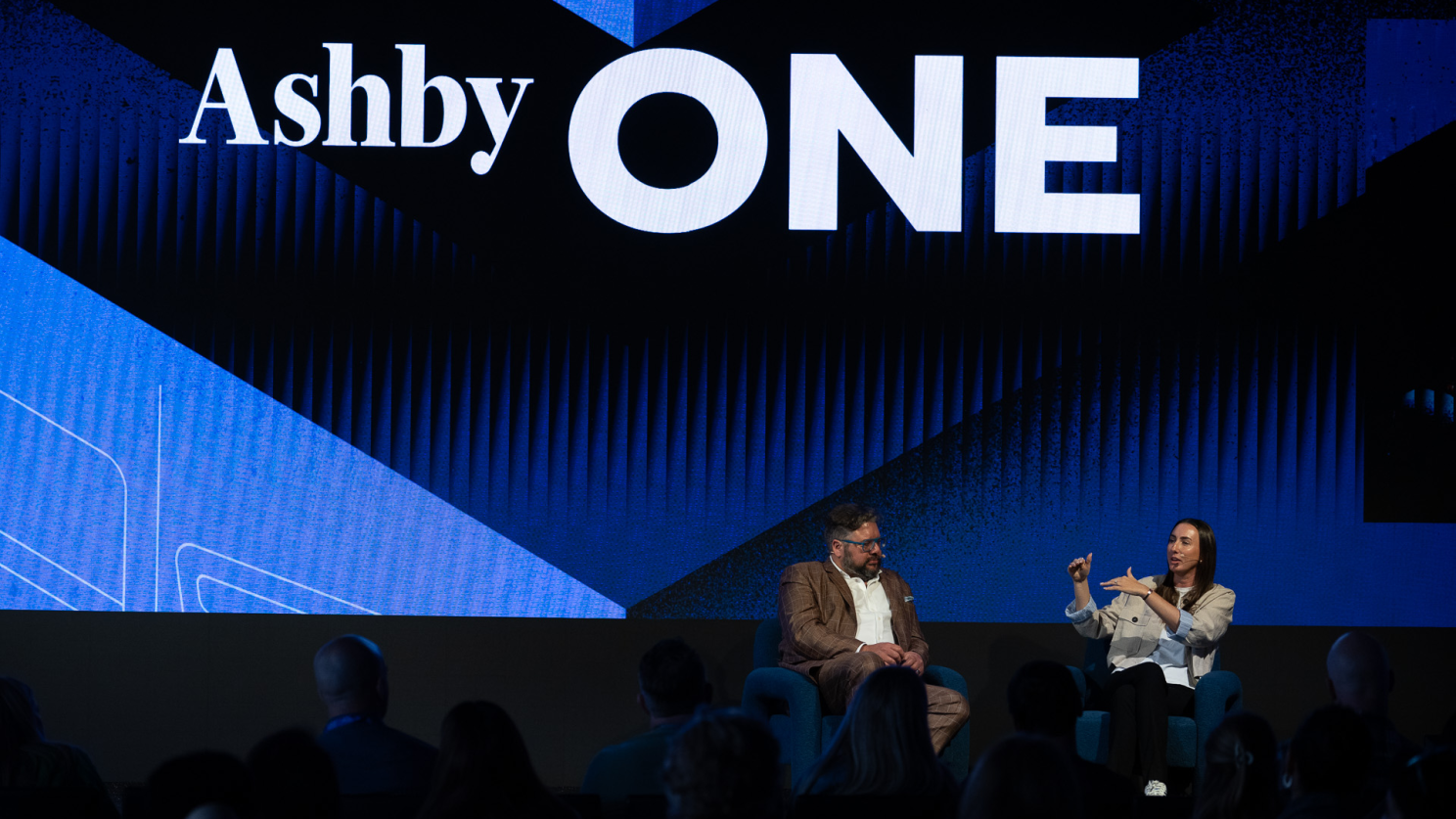
AI-native posture and speed. Ashby positions itself as building faster than the incumbents and shipping AI more aggressively, and the buying criterion in 2026 has genuinely shifted towards speed of AI adoption and platform flexibility. There are a couple of noteworthy recent developments that illustrate intent here. On integration, we now have the Ashby MCP Server, which they released in open Beta last month (June '26). In plain terms, it lets you plug your live Ashby recruiting context straight into external AI tools like Claude and Cursor, so you can do things like draft a management update or reconcile open roles against a headcount plan in a spreadsheet without exporting anything or building a bespoke integration. Two things I like about it beyond the feature itself. First, it's a signal of posture: rather than trying to trap you inside their own assistant, Ashby is betting you'll want their data wherever you already work, which is the right instinct in a world where this kind of openness is fast becoming table stakes. Second, satisfying my security and governance lens, it's permission-aware by design, authenticating through user-level OAuth so the AI only ever sees what that user could already see in Ashby, with admin approval available before any write actions. My note of realism is the same as everywhere else in this section: it's an open Beta, so treat it as a strong directional indicator rather than a foolproof ready-to-go workflow. On native AI within the platform, there are positive signals too. Ashby's acquisition of Talent Llama, an early-stage AI-interviewer startup, is notable partly because it's their first ever acquisition, closed in late 2025, and they've been rebuilding it natively on the Ashby platform since. What caught my eye is the design choice: it's voice and text based rather than the video-avatar approach most people picture (and are fairly freaked out by!) when they hear "AI interviewer", and it's aimed at early-stage screening and higher-volume hiring rather than senior final rounds. Ashby's own internal usage is a useful early signal here, with 36% of candidates opting for the AI interview over a human call when given the choice at screening stage, and reportedly responding more positively than expected. The module was announced at the Ashby One conference in May ('26) and reflects their focus on moving from AI for assistance into AI core workflows. It will be interesting to see how quickly it's adopted, and what it looks like in a couple of years once this becomes the norm rather than the exception.
Watch points to ensure a successful migration 👀
Like all platforms, Ashby has its quirks. Based on the successful migrations our team have delivered and the lessons learned in the process, here are some key considerations:
The seat model rewards modelling up front. Ashby's elevated, paid seats are the one commercial detail large organisations should map out early to avoid any nasty surprises. If you have a big population of hiring managers and interviewers who all need more than limited access, those users get pulled up into paid seats, so the shape of your team really impacts the shape of your bill. For a leaner company, or one where a lot of your interviewing population genuinely only needs light-touch access, it is a non-issue. From Ashby’s side, they believe they are rewarding the efficiency they are helping achieve in your recruiting teams via seamless processes and automation. The good news is that this is entirely predictable and seats are occupied dynamically. Model your seat usage against your real hiring process before you sign, not after, and there are no surprises. One great workaround we’ve already used with some clients is using the excellent slack integration to partially bridge this gap and provide dashboards to folks who may not end up with an elevated seat.
A few workflows are still on the roadmap for a holistic overhaul. Offer management is one example. It still leans on a static document with bracketed tokens, which will feel familiar to anyone who has done it in Workday and is a little more manual than the rest of a product this modern. It works well today, and it is being improved on what feels like a weekly basis, so this is a snapshot of mid-2026 rather than a permanent state.
Scheduling is capable, but not yet best in class. Make sure to review complex scheduling across interviewer pools using direct booking links, which is still a work in progress and does not yet match what a dedicated tool like GoodTime offers. There are also a few smaller hygiene items that catch teams out if nobody owns them, such as the occasional duplicate invite when Ashby auto-replaces a decline, a template carrying the wrong token or a hard-coded duration, and a pool showing more interviewers than are genuinely active. None of it is a blocker, and the workarounds (a single-interviewer activity, or the candidate availability flow) do the job, even if they feel a little manual. This is another of the faster-moving parts of the product, so my advice is, If scheduling is central to how you operate, it is perfectly sensible to keep your existing scheduler running a little longer, get your pools, templates and calendar connections clean at the start, and let Ashby close the gap in the months and years after your phase 1 deployment. LinkedIn is a deliberate trade, and the CRM is why it’s manageable. Unlike some of the incumbents, Ashby is not a LinkedIn partner (as of July 2026!) in the way you may be used to, so if a deep native LinkedIn integration sits at the heart of how your sourcers work, go in with your eyes open. The good news is that this is more of a design choice than a real gap, because Ashby's native CRM and sourcing is one of the most powerful parts of the platform. In practice, teams find they lean on LinkedIn far less than they expected, as so much of the searching, sequencing and nurture they used to push out to other tools now lives natively in Ashby. My advice is to be honest about how dependent your current process is on LinkedIn, then weigh that against how much of the work the built-in CRM can absorb.
The AI and some configuration logic are still maturing, but at pace. Setting up certain condition rules today can feel more like writing a formula than describing what you want to an AI assistant. This is the fastest-moving part of the product, and Ashby is shipping against it quickly, so I expect much of this to change fast. My only advice here is one I would give for any platform choice: anchor your decision on what is in the tenant today and treat the roadmap as upside rather than a promise (“safe harbor applies!” for the Workday nerds among us).
Native integration is a trade, and a good one. Because Ashby owns the integration, you depend on Ashby to build new custom fields and certain configurations, rather than doing it all yourself. In practice this is a trade well worth making, because you create custom fields rarely and you get near-zero integration maintenance in return, but back-end purists who like total control should simply know the flexibility sits in a different place than they are used to. The one thing to get right is your field mapping and your processes at the start, because there is less need to rework them later, which is exactly how it should be!
Making it a real success 🚀
For high-growth companies that value clean insights, platform consolidation and a modern, AI-forward platform, and that are prepared to plan their seat model intentionally and their process design thoughtfully, it is easily the best choice on the market right now, and the migration numbers reflect that. However, for very large organisations with enormous manager self-service populations and heavy, non-standard process debt, the elevated seat based commercials and the change-management lift need genuine scrutiny before considering.
As is typical in all HR tech deployments - people blame the old software, celebrate the new software, and skip the most important transformation work in the middle. Usually it’s your entire RecOps operation that needs an overhaul, not just the technology driving it and nothing changes with an Ashby deployment. Don’t assume the tool fixes all your process and data problems, you need a solid Phase 0 to prepare your foundations, especially if you are running with a lean deployment team.
Ashby's native integration will happily expose every piece of messy data and every unloved process you have been carrying, and that is a blessing in disguise. The companies that get the most out of Ashby are the ones that treat the migration as a chance to standardise and simplify aggressively, not just to re-platform the mess they already had.
Where we come in 🦾
That is the part we spend most of our time on at Wave1. We are Ashby partners, but HR tech advisors first, and we help Talent teams reimagine their operations holistically across all their tools and processes rather than carrying out a lift and shift of processes from the prior ATS which is so easily done when working with aggressive timelines and juggling multiple priorities.
If you are weighing up a move to Ashby and need help to navigate decision making, or are about to deploy and lacking the internal resources to do it properly, let us know!